







Client
Project category
D2C, GenAI, Travel
Timeline
4 Months
Team
Founder/CEO
Founding UX Designer (That's me 👀)
4 UX Researchers
TL;DR:
LocHist LLC, an early-stage travel startup, set out to build Enroute, an AI-driven MVP that changes how travelers plan and experience trips. LocHist wanted itinerary planning to feel effortless and personal, for solo travelers and groups alike.
Trip planning today is spread across disconnected tools with no shared plan. Travelers visit an average of 38 websites before booking, 70% struggle to find activities that match their interests, and 50% find it difficult to coordinate plans with friends.
Enroute brings the whole process into one AI-assisted itinerary. Every traveler adds to a shared bucket list, AI generates routes matched to the group's interests and budget, and AI search adds web results to the plan in one tap. In moderated usability testing, 10 of 10 participants completed every task across 3 user flows, and 7 of 10 rated the AI's suggestions as relevant.
My Contribution
Partnered directly with the Founder/CEO & 4 UX researchers
Turned the founder's vision and research findings into a focused MVP scope with 3 core features.
Designed a scalable MVP grounded in a Business outcomes
Used a Business Model Canvas to tie design decisions to revenue streams, customer segments, and AI costs.
Owned designing of end-to-end hi-fi prototypes & usability testing
Ran moderated usability testing with 50 participants and trained a custom GPT model to measure perceived adoption.



The Problem
The Solution
Enroute turns everyone's preferences into a shared itinerary, editable with AI powered search and paired with a smart budget estimator
so travelers spend less time planning and more time packing!




Collaborative AI Generated Itineraries
Travelers explore the app and save the places and activities they love to a shared bucket list. AI arranges those picks to fit the group's timeline, budget, and preferences, creating an editable itinerary with a match score for how well it suits everyone.
How this solves the problem
Search, generation, and editing all happen in one flow, so the group starts from a working itinerary that already reflects every traveler's picks.
AI-Powered Search
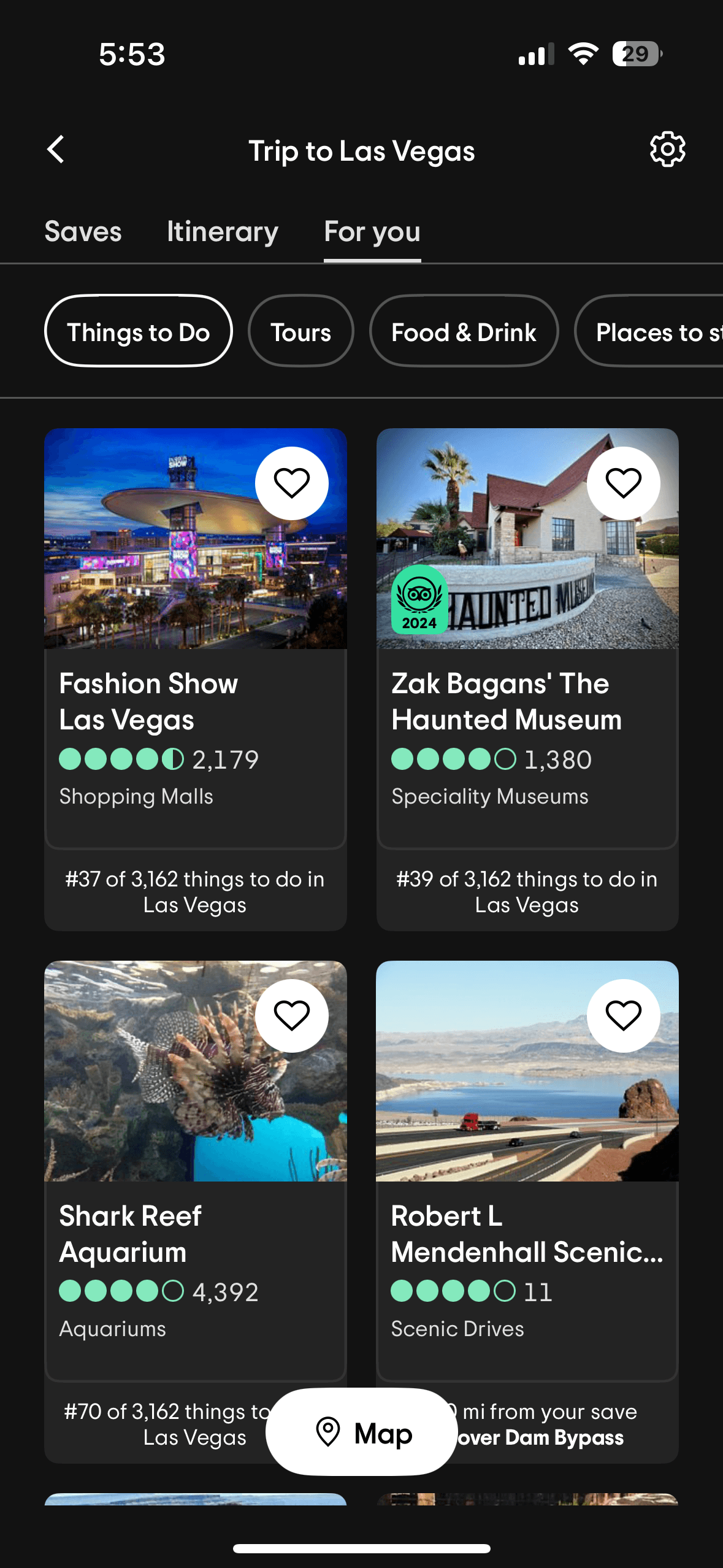
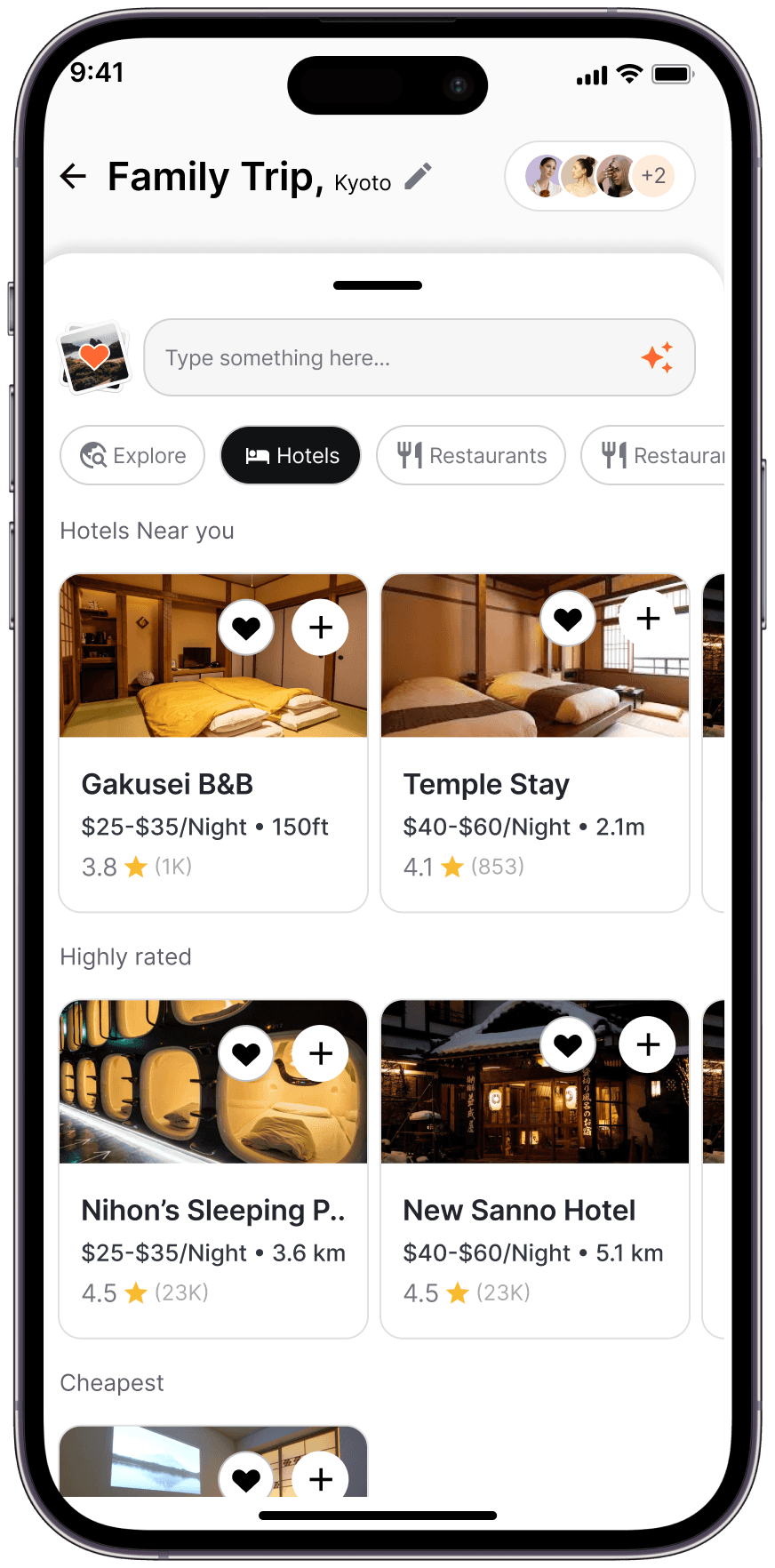
Travelers who want to build their own itinerary search for hotels, restaurants, and attractions. Results are filtered by each traveler's preferences and constraints and ranked by rating, cost, and distance, and any result goes into the trip in one tap.
How this solves the problem
Enroute does the searching across dozens of travel sites for the traveler. That turns the 38-website research loop into one shortlist that leads straight into the plan.
Map

Type something here...
Explore
Hotels
Restaurants
Activities
+ more
9:41
Family Trip, Kyoto


+2
Day 1
Day 2
Day 3
+ Add
Tokyo International Airport, Japan
...
Add
Select Hotels


9:41
Family Trip, Kyoto
+2
Type something here...
Explore
Hotels
Restaurants
Activities
+ more

Nobu
Japanese Cuisine • 2.1 km
$20-$30/Per person
3.8
(1K)

Gyoza Shinjuku
Japanese Cuisine • 150ft
$25-$35/Per person
3.8
(1K)

List
Route Map and Trip Cost
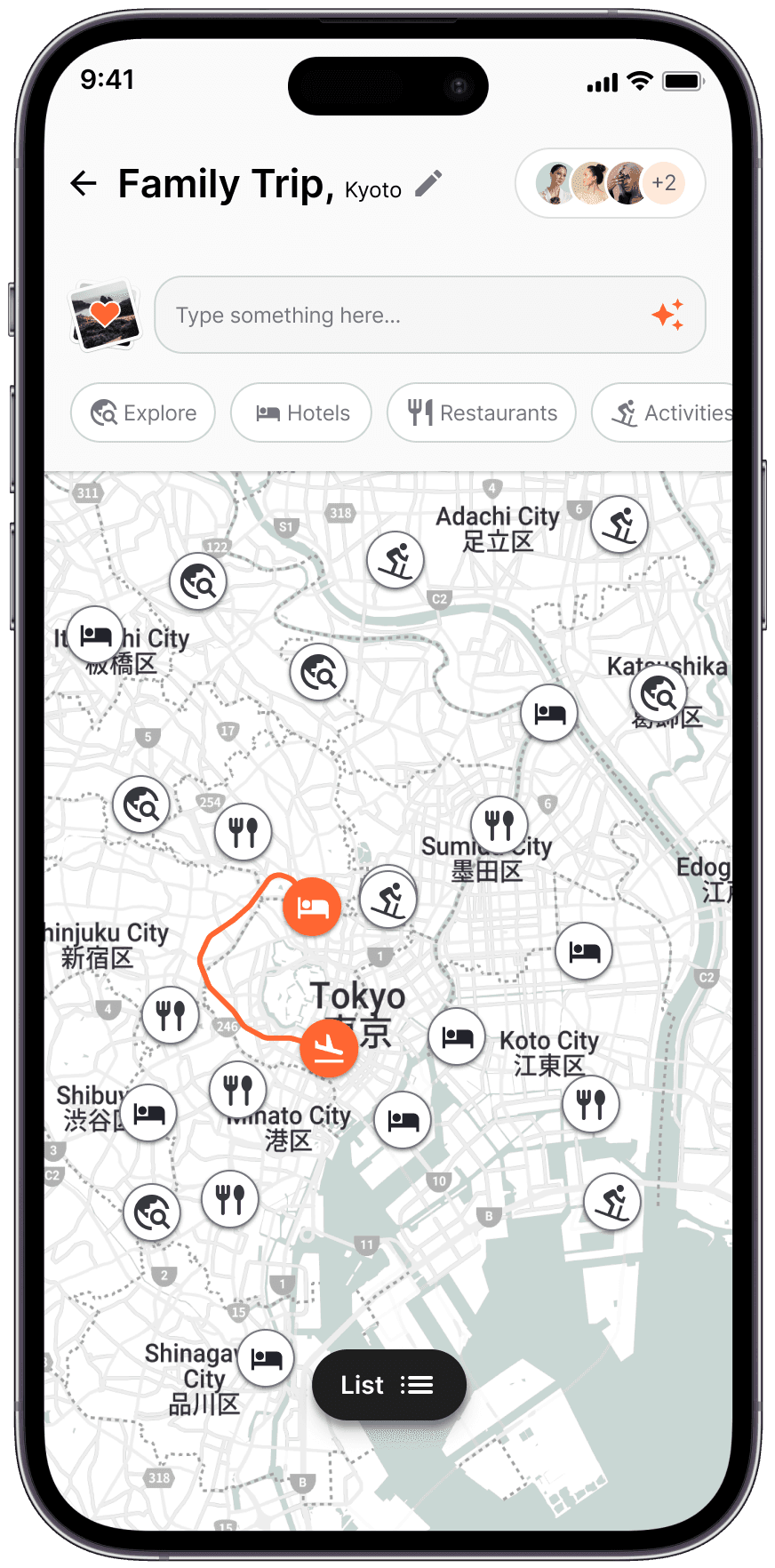
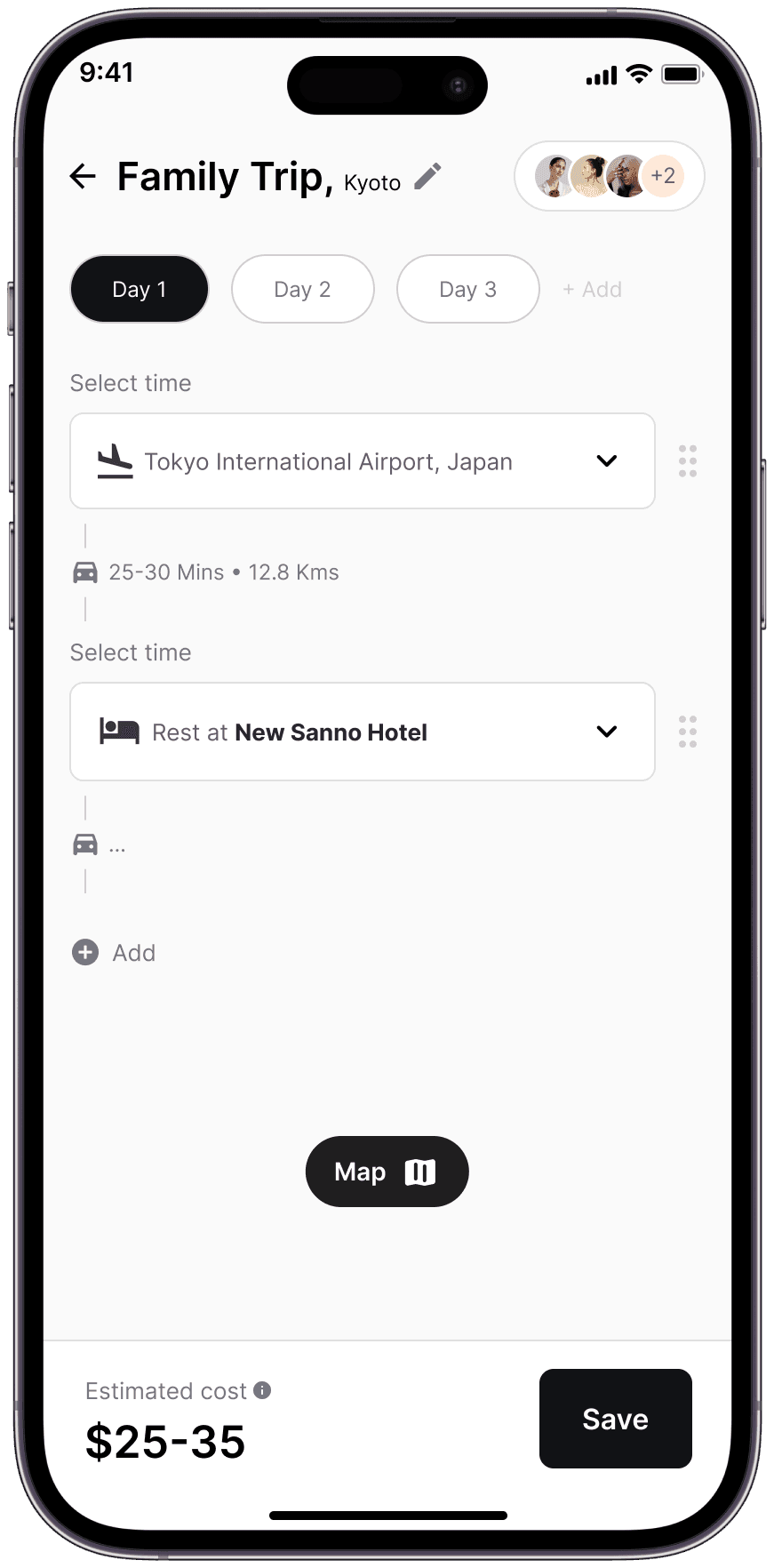
Every itinerary shows up as a route on the map with distances between stops. Next to it is a live trip cost that updates as stops are added, removed, or reordered.
How this solves the problem
Mapping the route and tallying the budget, two jobs travelers used to do in separate apps, now happen inside the itinerary itself.
Enroute delivers smarter, faster, and more meaningful travel experiences with potential to reduce planning time by up to 40%.
Percieved Adoption Rate
Sample size: 10
People's Choice Award
Capstone Project Showcase
Expressed Interest to upgrade
for premium features

Since travel is inherently vast and deeply personal, it was initially challenging to define the scope and align it with both business objectives and user needs.
In collaboration with stakeholders, we used the Business Model Canvas supported by data-driven insights to map both business and user needs, helping us narrow down the project scope.
in-depth interviews with frequent travelers and secondary research
In-depth interviews
Survey responses
Research papers analysed
Lack of personalization
70% struggle to find activities that match their interests
Disjointed collaboration
50% experience difficulty coordinating with friends while planning
Decision fatigue
Sifting through numerous websites to find information
Competitor
Tripadvisor
Wanderlog
TripIt
Pros
Strong reviews & recommendations
Good group planning features
Great for itinerary organization
Limitations
Lacks collaborative planning tools
Doesn’t auto-generate itineraries
No AI-powered personalization
No collaborative AI-powered trip planner that helps groups coordinate plans seamlessly.
Scroll to see more analysis



How might we help travelers co-create personalized itineraries while reducing the time spent on planning and searching?
Dreamer
70 Wild Ideas with No restrictions
Explore places using fun facts or riddles with hints on the map.A platform/device that gives directions for rare finds.
Historical flashbacks with vintage photos or ads.
UI with vintage elements related to each state.
App displays a checklist of “how to be a local in...”
Users can apply filters to customize options.
Location-based audio narratives with notifications.
Group listening feature for audio narratives.
Synchronized playback for listening groups.
Users input exploration time, walking time, and preferences for ideal route suggestions.
Digital scrapbook (audio, video, badges) sent to users post-visit for social sharing.
Route filters: budget, popularity, rare finds, ratings, crowd levels.
Itinerary and planning tools.
Geo-location-based podcasts.
Gamification elements for engagement.
Treasure hunt game: earn points, credits, or restaurant discounts by completing tasks.
Platform that narrates stories about places as users visit or drive by.
App suggests local transportation options for an authentic experience.
State-specific welcome messages (e.g., "Howdy, partner!" in Texas).
Unlock vintage postcards upon entering a new state or completing challenges.
Mid-century travel poster-style illustrations in the UI.
Retro sound effects tied to the cultural vibe of each state.
"Surprise me" feature suggests hidden gems based on available time and location.
Conversational UI with a fictional character as a travel guide.
Group itinerary planning with shared editing access.
Engaging, interactive map interface for routes.
Select themes to generate personalized routes.
Use GenAI to generate personalized routes.
Notifications for spontaneous pop-up events or markets nearby.
Local transportation suggestions, including bikes and quirky transport options.
Highlight lesser-known festivals, traditions, and community events.
Calendar of seasonal events like farmers’ markets and parades.
Curated food trails guiding users to authentic local eateries.
Region-specific cuisine recommendations (e.g., lobster rolls in Maine).
Reviews, comments, and pictures under audio narratives.
Fun fact and trivia swipe-able cards.
Downloadable generated routes.
Route pins with detailed location cards (safety, parking, maps, etc.).
Users choose content format: audio, quizzes, fun facts, videos, or photos.
AI-generated live camera maps with interactive trivia and 3D elements.
AR-enhanced travel guidance with interactive storytelling.
Meta glasses as a travel buddy providing real-time suggestions.
AI-driven itinerary and trip planning based on user preferences.
Voice assistant syncing with geo-location for real-time recommendations.
Travel influencers’ routes available for users to explore.
User reviews contributing to filters and badges.
Unlocking 3D historical models and artifacts based on exploration time.
Public leaderboard displaying collected artifacts.
Bonus XP and coupons for visiting partnered locations.
Digital slam book for capturing and sharing trip memories.
State-themed elements inspired by unique state names (e.g., "The Garden State").
Social networking and engagement features for travelers.
Celebrity voice guides tailored to user interests.
Suggestions for current events at the travel destination.
AI-personalized recommendations while maintaining privacy.
AI-generated plans visualized in a user-friendly format.
Display trending social media content related to the destination.
AR filters overlaying historical images and videos at landmarks.
AI personas narrating stories as historical figures.
Collecting stories from local figures and presenting them as time-travel experiences.
Localized welcome messages on the homepage (e.g., “Hello from the Hoosier State”).
Follow historians and their audio narratives on destination history.
Add places with audio narratives to personalized itineraries.
User-generated content: travelers record and upload their experiences.
GPS-triggered audio narratives at landmarks.
Short trivia quizzes post-audio narrative for engagement.
Sending digital postcards via email after completing challenges.
Interactive, gamified elements to maintain user interest.
Accessibility considerations (parking accommodations, etc.).
Real-time leaderboard tracking user progress and discoveries.
Realist
15 Realistic ideas based on business goals
AR-based route visualizer
“Surprise Me” hidden gem feature
GenAI-powered route generator with thematic filters
Conversational UI with AI travel guide
Treasure hunt game with points or restaurant discounts
Checklist: “How to Be a Local in…”
Unlockable digital postcards or badges by state
Digital scrapbook (photos, video, badges)
Downloadable generated itineraries
Route filters: budget, popularity, rare finds, ratings, crowd levels
Group itinerary planning with shared editing access
Select themes to generate
personalized routes
Fun facts and trivia swipe-able cards
Critique
3 ideas that aligns both user needs and business goals
GenAI-powered route generator with thematic filters
Conversational UI with AI travel guide
Group itinerary planning with shared editing access
Feature 1
Group travel often results in conflicting interests, making itinerary planning a hassle. Traditional planning requires constant discussion and compromise.
For example: One traveler may prefer museum visits, while another prefers outdoor hikes.
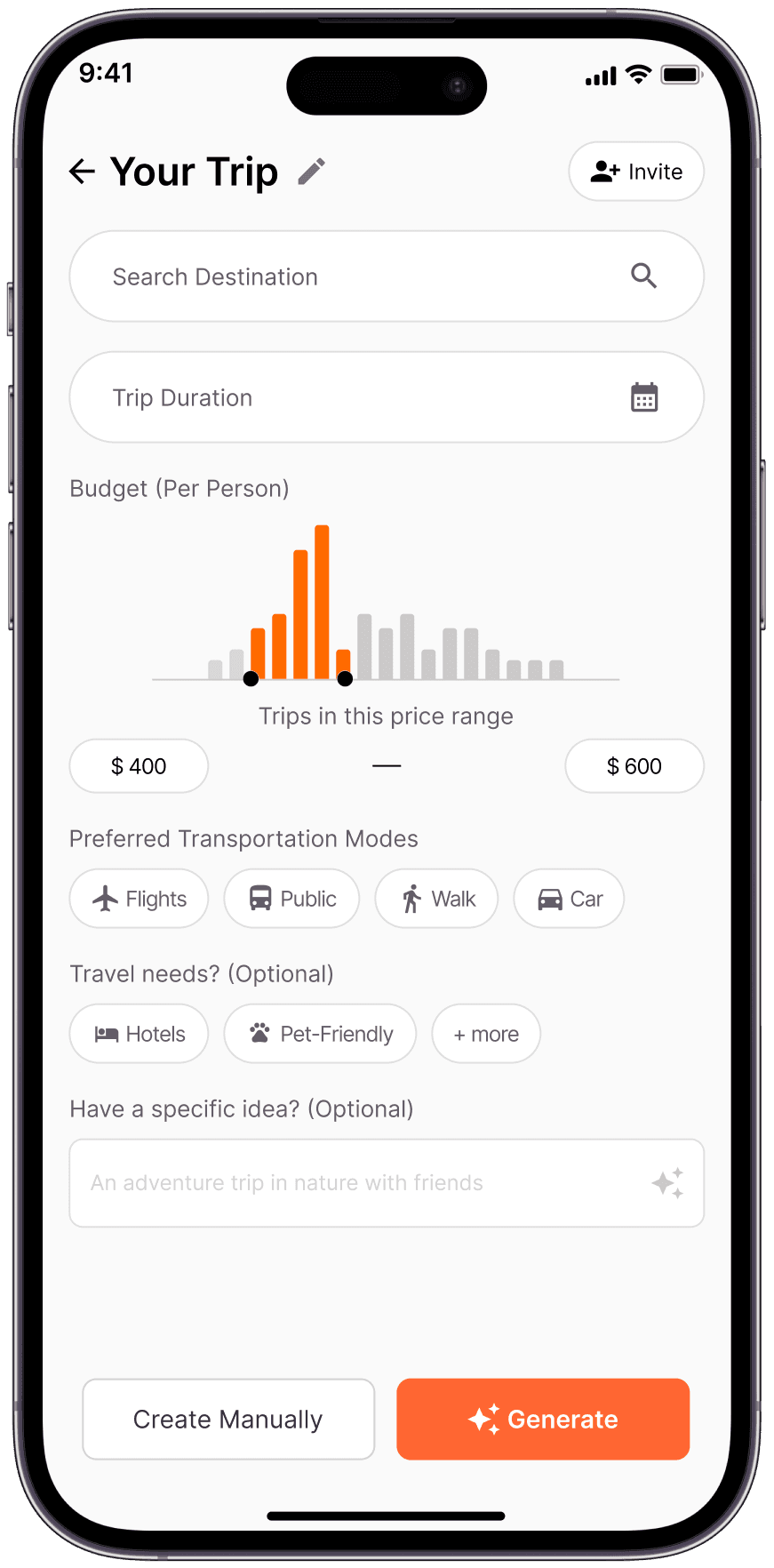
An AI-powered itinerary builder that automatically considers everyones preferences and generates customized trip plans based on user-provided details.
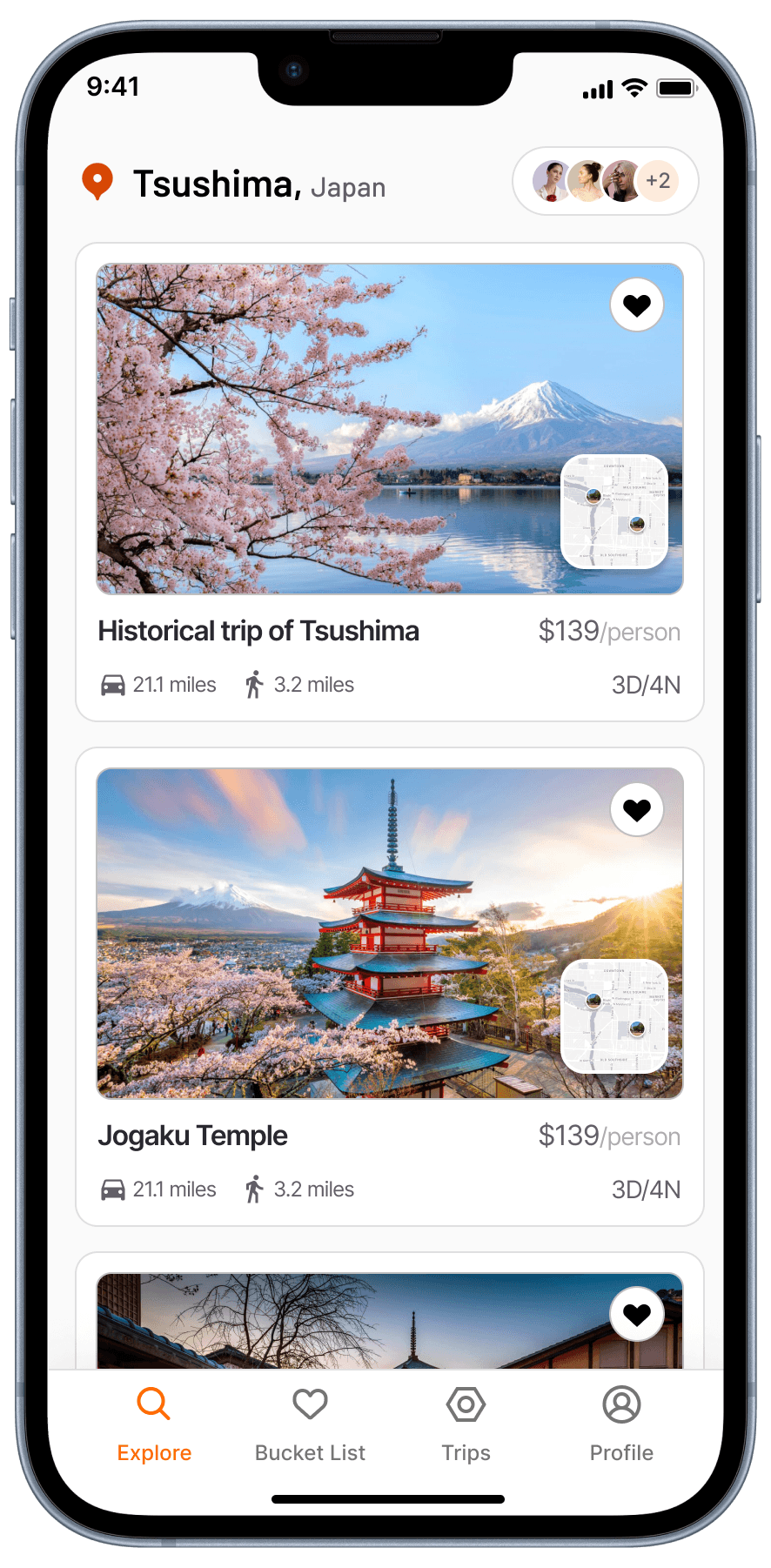

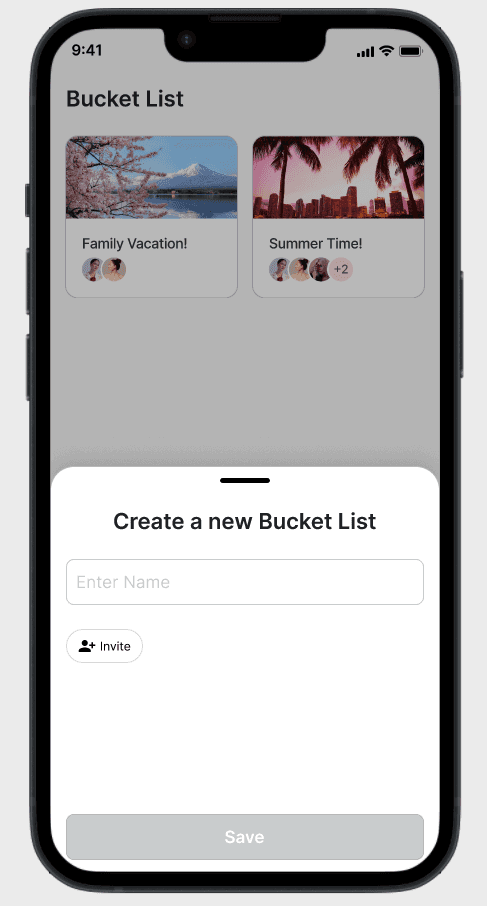
Create a bucket list

Invite people to this trip
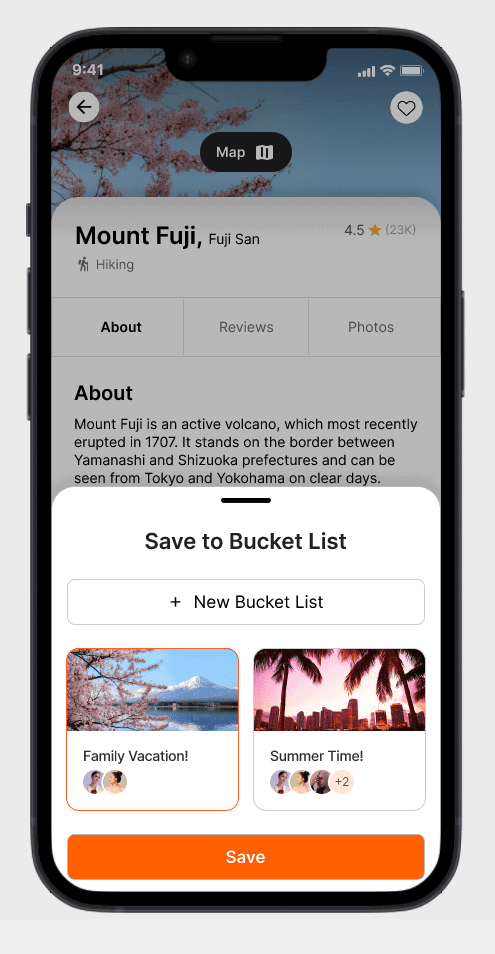
Add locations, activities, etc. to your bucket list
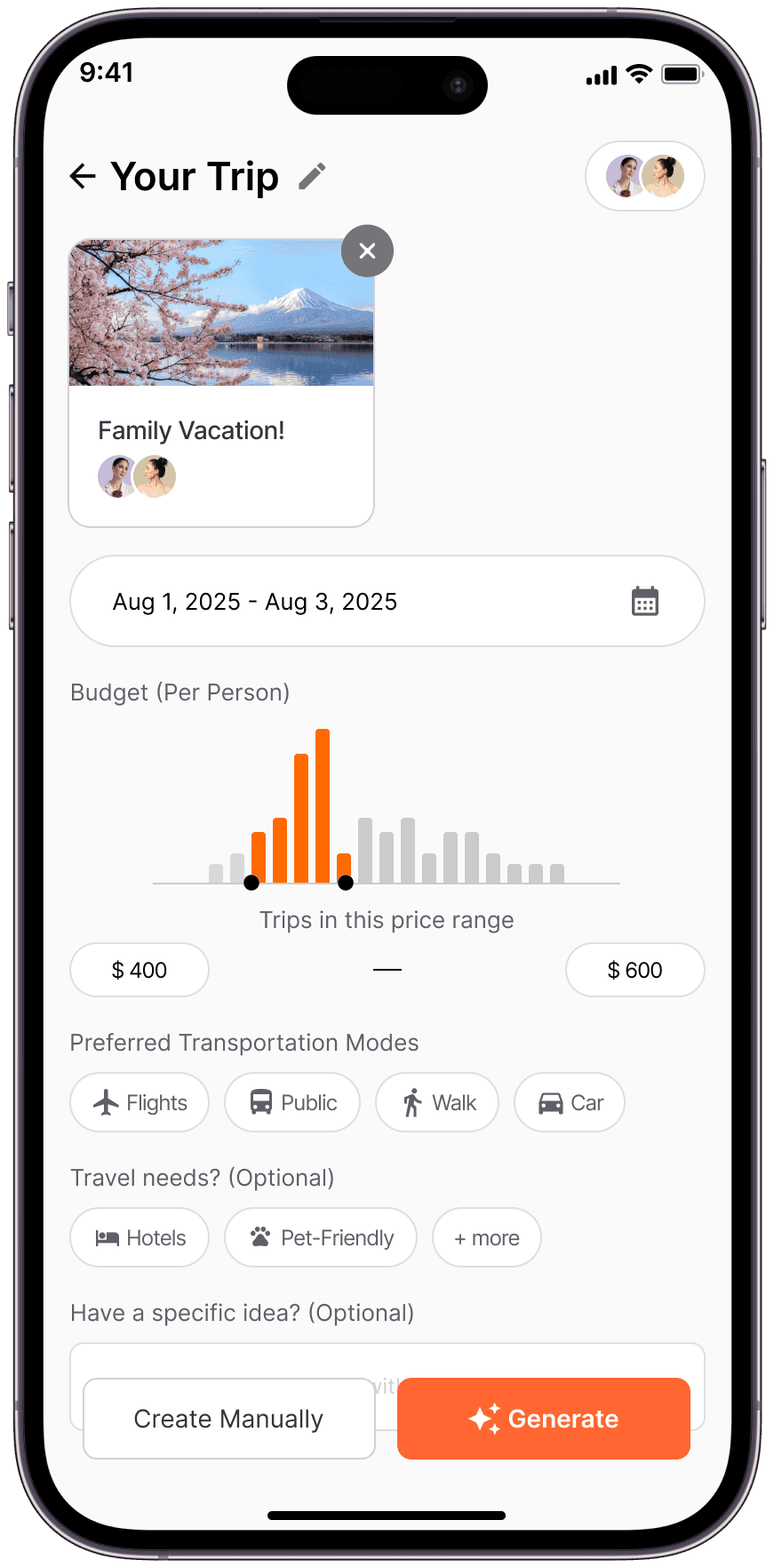


Feature 2
When planning a trip, users must manually search for locations, Activities, hotels, activities, and transport options and fit them in their preferred budgets leading to long and inefficient workflows.
An AI-powered search feature, which will search the internet to find best hotels, restaurants, locations to created a curated list with just a click to help you build a custom itinerary
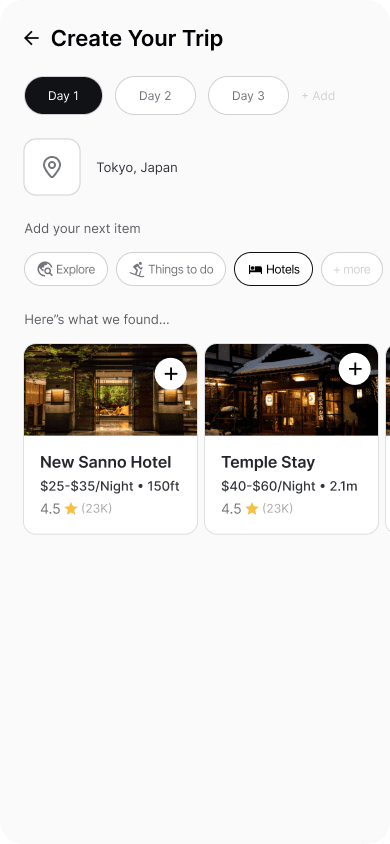

Can see Itinerary plan instantly
Difficult to scan as itinerary builds
Difficult to track, Overcrowded screen
Rejected

Personalized requests
Very tedious, need multiple prompts
Difficult to track, Overcrowded screen
Rejected

Plan always visible
Search is hidden & easy to browse
Hidden & tucked away so no clutter
Selected
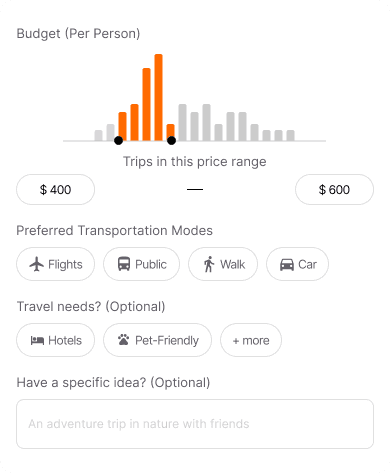
The search results will automatically be filtered based on your preferences
List view

Map view
You can use either list view to see high-level details or use a map view to visualize your route
List view

Map view


Solving Business Goals
Design the MVP so it can support viable revenue streams and pricing strategies within the pilot/MVP stage without requiring a complete redesign later. The goal is to test monetization options early while keeping flexibility to expand pricing tiers in future releases.
To evaluate each model, the following metrics are used:
Value for Money (All User Types) – Equitable perceived value for both frequent travellers and casual travellers.
Affordability – Should be a clearly cheaper alternative compared to existing travel planning tools.
AI Model Usage Cost Feasibility – Pricing covers operational costs for AI inference and API usage without compromising profit margins.
Low Hassle for User – Minimal complexity in understanding the payment process, no hidden costs.
Scalability & Retention Potential – Ability to scale to more users while maintaining predictable revenue and encouraging repeat use.

Fixed payment at the time of download or saving a trip.
One payment unlocks full access.
Low cost vs. other tools.
No recurring revenue to cover AI costs.
Must decide to pay upfront without trial.
No incentive for repeat use.
Charge per trip, per route, or via credits purchased at time of saving the trip.
Pay only for what you use.
Flexible spend per trip.
Data Encryption
Payment needed for each trip.
Hard to build loyalty.
Selected
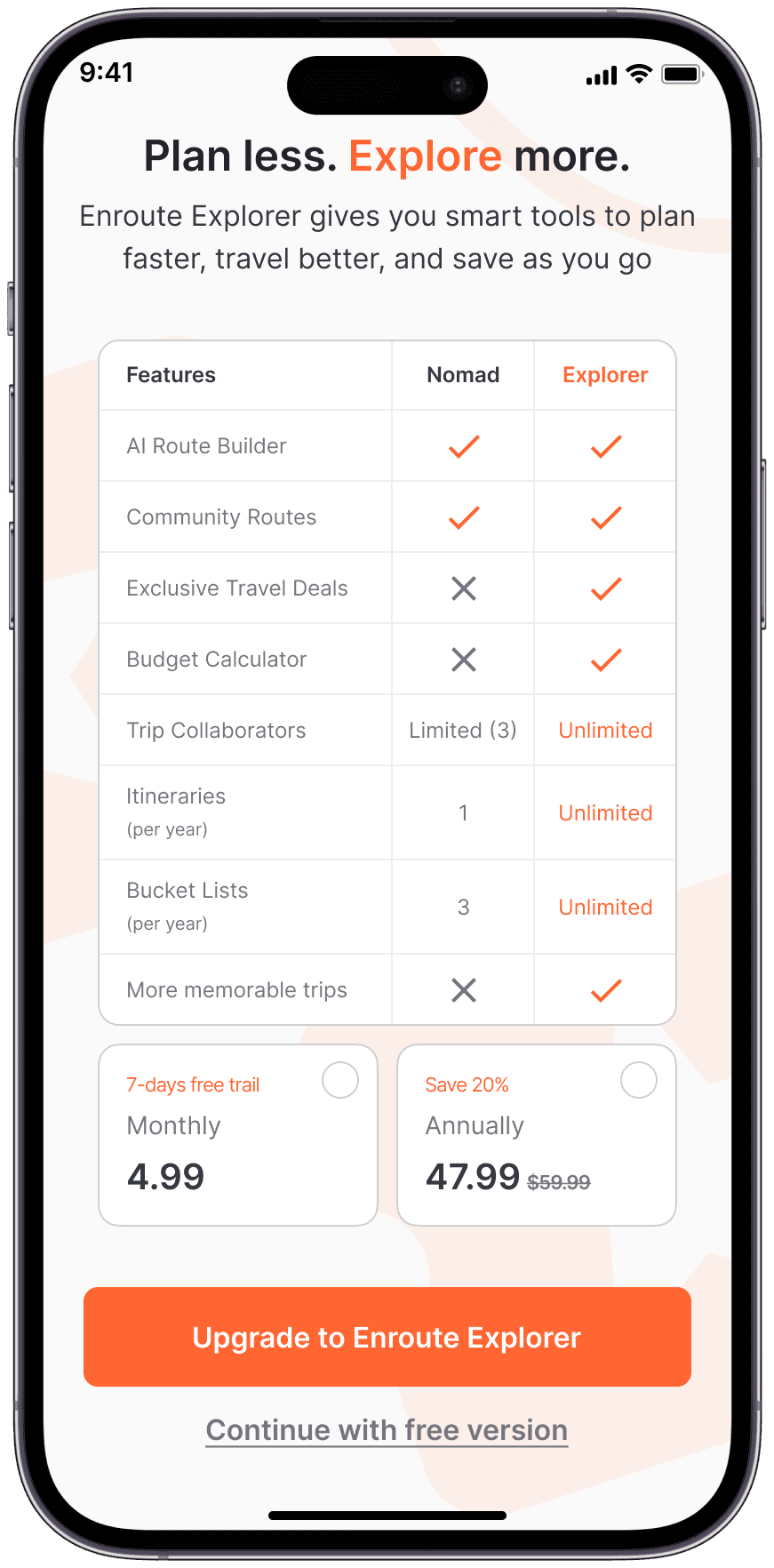
Freemium approach – App is free; premium features unlocked with monthly/yearly plans.
Ongoing access for one fee.
Low monthly entry cost.
Predictable recurring revenue.
Auto-renews, no repeated payments.
Churn risk if features aren’t sticky.


Map view

Usability Testing
We conducted remote moderated usability testing including
Methods
Participants
User flows
Avg. Time on Task:
10/10 completed the tasks successfully
We created and trained a custom GPT model to analyze user preferences and the travel archetypes to see if the generated itinerary matches with user preferences.

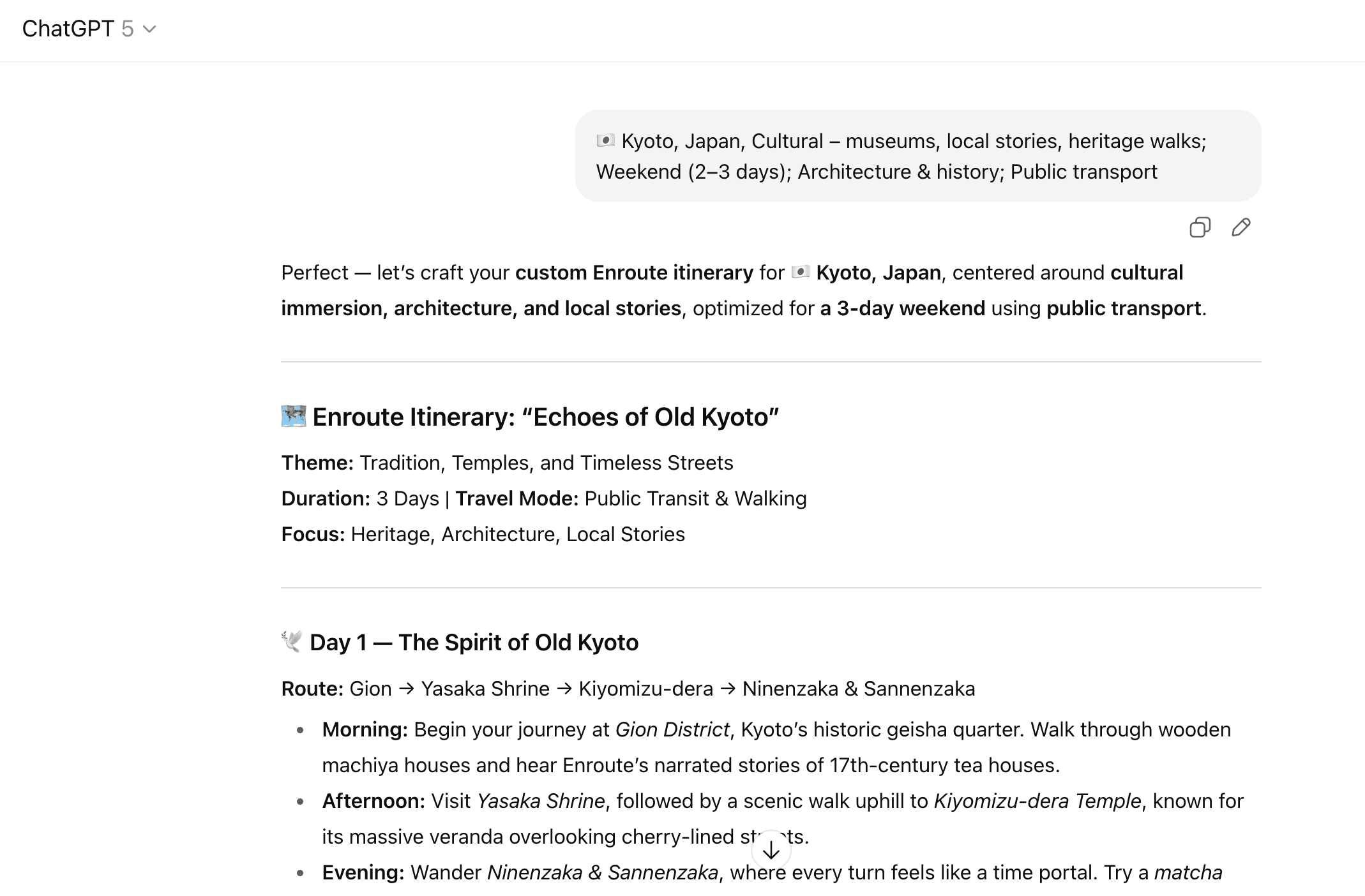
7/10 have expressed satisfaction of relevance of suggestions
User Quote
"I wish I had an app like this when planning my honeymoon, It would have been so easy"
One of the user during user testing
User Quote
"Usually, planning my weekend getaway takes longer than the trip itself. Enroute had it sorted so fast"
One of the user during user testing
Enroute delivers smarter, faster, and more meaningful travel experiences with potential to reduce planning time by up to 40%.
Percieved Adoption Rate
Sample size: 10
People's Choice Award
Capstone Project Showcase
Expressed Interest to upgrade
for premium features